
Physiotemple Health | Woodbridge • Vaughan • Peel & York Region
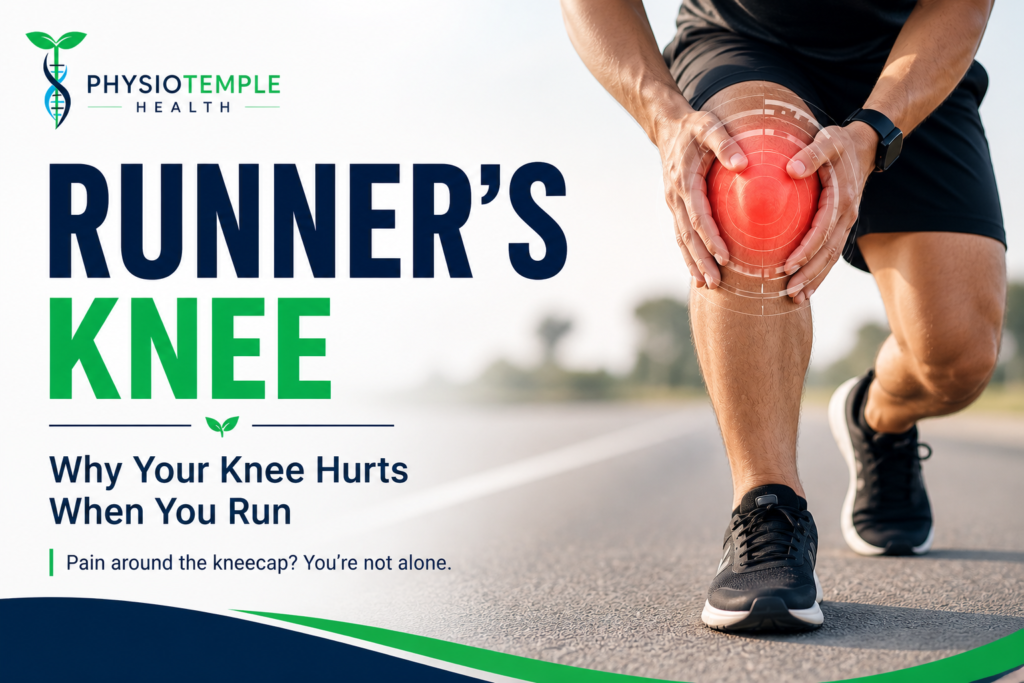
Runner’s knee is one of the most common causes of knee pain in active people. Even though the name says “runner,” it can also affect people who walk a lot, go to the gym, play sports, or spend long periods going up and down stairs. It usually causes pain around or behind the kneecap, and it often gets worse with running, squatting, stairs, or sitting for too long. Mayo Clinic describes patellofemoral pain syndrome, often called runner’s knee, as pain at the front of the knee around the kneecap, especially common in runners and people who do running and jumping sports.
At Physiotemple Health in Woodbridge, we treat runner’s knee with a combination of physiotherapy, chiropractic care, and massage therapy. This kind of knee pain usually is not caused by just one thing. It often involves movement mechanics, muscle weakness, tissue tightness, and joint loading issues. Consensus statements and best-practice guidance support exercise therapy as the foundation of care, with certain added treatments like taping, orthoses, and manual therapy used when appropriate.
🔍 What Is Runner’s Knee?
Runner’s knee usually refers to patellofemoral pain, which is pain around the kneecap. It commonly shows up during activities that load the knee repeatedly, especially running, stairs, squatting, jumping, and prolonged sitting. The 2016 patellofemoral pain consensus statement describes it as diffuse anterior knee pain that is usually aggravated by squatting, running, and stair use.
Common symptoms include:
- Pain around or behind the kneecap
- Pain with stairs
- Pain while running or after running
- Discomfort with squats or lunges
- Knee stiffness after sitting
- Clicking or grinding sensations
⚠️ Common Causes of Runner’s Knee
Runner’s knee usually builds up over time rather than happening from one major injury. It is often linked to how the knee is being loaded during movement.
Common causes include:
- Sudden increase in running volume
- Poor lower-body mechanics
- Weak hips or glutes
- Muscle imbalance
- Tight quads, calves, or IT band
- Poor footwear
- Repetitive stress from sport or exercise
- Reduced control during squatting or landing
Current consensus and best-practice guidance support the idea that patellofemoral pain is best managed by addressing load, exercise, and movement quality, not by relying on rest alone.
🏃 Physiotherapy for Runner’s Knee
Physiotherapy is usually the main treatment for runner’s knee.
A physiotherapist may assess:
- Running and walking mechanics
- Hip and knee strength
- Foot control
- Mobility
- Squat pattern
- Training load
Treatment may include:
- Strengthening exercises 💪
- Hip and glute strengthening
- Knee control exercises
- Mobility work
- Load management
- Return-to-running guidance
- Taping when appropriate
The best-supported treatment for patellofemoral pain is exercise therapy, especially combined approaches that target both the hip and knee. The 2018 BJSM consensus statement recommends combined interventions to reduce pain in the short and medium term, and the 2024 best-practice guide again supports exercise therapy as the core of treatment.
Physiotherapy is ideal if:
- Knee pain keeps coming back
- Running or squatting makes it worse
- You want to keep training safely
- You want long-term improvement instead of temporary relief
🦴 Chiropractic Care for Runner’s Knee
Chiropractic care can help improve joint mobility and movement mechanics.
The knee does not work alone. The hip, ankle, and even the lower back can all affect how force moves through the knee. If those areas are stiff or not moving well, the kneecap may take extra stress.
Chiropractic care may include:
- Joint mobilization
- Mobility work for the hip and ankle
- Movement correction
- Manual therapy
- Guidance on loading and posture
Best-practice guidance for patellofemoral pain supports certain physical interventions, including manual therapy, when used alongside exercise rather than on their own.
💆 Massage Therapy for Runner’s Knee
Massage therapy helps address muscle tightness and tissue tension around the knee.
It may help with:
- Tight quads
- Tight calves
- IT band tension
- Hip tightness
- General soreness after activity
- Recovery support
Massage therapy can be useful for symptom relief and comfort, especially when tight surrounding tissues are adding stress to the knee. On its own, it usually is not enough to fully fix runner’s knee, but it can support a rehab plan very well when combined with strengthening and movement correction. This fits with current consensus that adjunctive treatments work best alongside exercise-based care.
🔗 Why Combining Care Works Best
Runner’s knee is often not just a “knee problem.” It can involve:
- Weak hips
- Tight muscles
- Joint restrictions
- Poor running mechanics
- Overload from training
At Physiotemple Health, we often combine:
- 🏃 Physiotherapy to strengthen and retrain movement
- 🦴 Chiropractic care to improve mobility and mechanics
- 💆 Massage therapy to reduce tissue tension and support recovery
This type of combined care fits with patellofemoral pain consensus recommendations, which support exercise as the base and selected additional treatments based on the patient’s needs.
🎯 Who Runner’s Knee Treatment Is For (and Who It Is Not)
This care is great for:
- Runners
- Gym-goers
- Athletes
- People with pain using stairs
- People with knee pain during squats or lunges
- Active adults with recurring kneecap pain
This care may not be ideal if:
- You have a fracture
- You have major swelling after trauma
- Your knee locks completely
- You need urgent medical assessment first
Mayo Clinic notes that some knee problems may involve more serious injuries or conditions, so people with significant symptoms should be properly assessed.
📍 What to Expect at Physiotemple Health
When you visit our clinic for runner’s knee, we focus on both pain relief and finding the reason it started.
Your care may include:
- Full knee assessment
- Strength testing
- Movement analysis
- Hands-on treatment
- Personalized rehab plan
- Advice on training, shoes, and exercise progression
We proudly serve patients from Woodbridge, Vaughan, Brampton, Maple, Concord, Kleinburg, Richmond Hill, Mississauga, and surrounding Peel and York Region communities.
Many patients find us by searching:
- runner’s knee treatment near me
- physiotherapy for runner’s knee
- knee pain treatment Woodbridge
- chiropractor Vaughan knee pain
- massage therapy for knee pain
❓ FAQs: Runner’s Knee Treatment
What is the best treatment for runner’s knee?
Exercise-based rehab is the most supported treatment, especially programs that improve hip and knee strength and control.
Can I keep running with runner’s knee?
Sometimes yes, but the running load usually needs to be adjusted. A proper assessment helps decide what is safe. This is consistent with load-management principles used in patellofemoral pain care.
Does taping help runner’s knee?
Taping may help reduce pain for some people, especially when combined with exercise. Mayo Clinic and consensus statements both mention taping as a supportive option.
Is runner’s knee the same as tendonitis?
Not always. Runner’s knee usually refers to patellofemoral pain, while patellar tendinitis is a different condition involving the tendon below the kneecap.
Can shoes or orthotics help?
In some cases, yes. Orthotics or supportive inserts may reduce stress on the knee for certain people. Mayo Clinic includes arch supports and orthotics as options that may help pain.
📞 Book Runner’s Knee Treatment Near You
If knee pain is stopping you from running, training, or moving comfortably, we can help.
Physiotemple Health is a trusted multidisciplinary clinic in Woodbridge, serving Vaughan, Peel, and York Region.
📍 12 Woodstream Blvd, Unit 5, Woodbridge, ON
📞 905-995-4456
📅 Book Online:
https://physiotemple.juvonno.com/portal/publicbook.php?step=practitioner&branch_id=1
✨ Book your assessment today and get back to moving with less pain and more confidence.