
Physiotemple Health | Woodbridge • Vaughan • Peel & York Region
Quick Answer
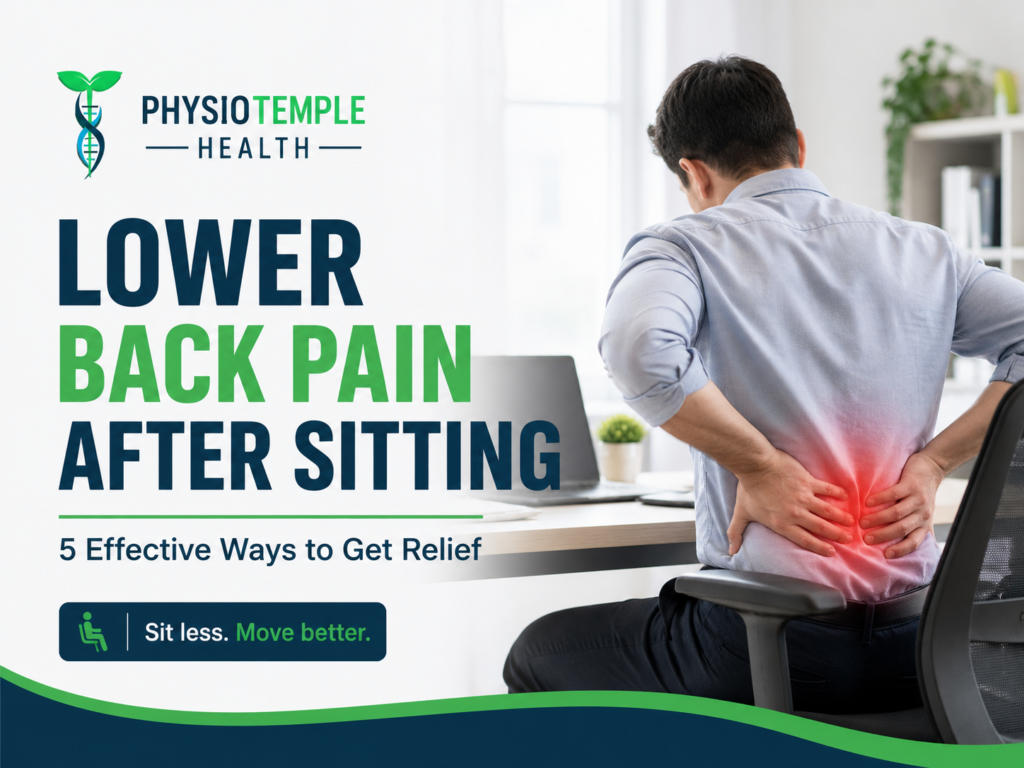
Lower back pain after sitting can happen when your back becomes sensitive to staying in one position for too long. Long desk days, driving, reduced movement, muscle fatigue, changes in activity, and certain back or nerve-related conditions can all contribute.
For many people, the problem is not that sitting itself is automatically harmful. The bigger issue is often spending hours in the same position without enough movement or variation. Prolonged sitting or inactivity can aggravate back pain, while staying active and gradually returning to normal movement are commonly recommended. Read the NHS guidance on back pain.
If lower back pain after sitting keeps returning, becomes severe, travels down your leg, or is accompanied by numbness or weakness, it is worth getting assessed.
What Lower Back Pain After Sitting Can Feel Like
Lower back pain after sitting may feel like:
- A dull ache across the lower back
- Stiffness when standing up from a chair
- Tightness after a long drive
- Pain after working at a computer
- A feeling that you need to stretch or crack your back
- Discomfort that improves after walking around
- Pain into the buttock
- Aching after sitting on a couch or soft chair
- Sharp pain during the transition from sitting to standing
- Pain or tingling that travels into one leg
Low back pain can range from a dull ache to sharper pain and may sometimes spread into the legs.
For some people, lower back pain after sitting becomes most noticeable at the end of the workday. Others feel relatively comfortable while seated but experience stiffness or pain as soon as they stand up.
5 Common Reasons for Lower Back Pain After Sitting
1. Staying in One Position for Too Long
Your body is designed to move.
Even a comfortable sitting position can start to feel uncomfortable when you stay there for several hours without changing position.
Long periods of:
- Desk work
- Gaming
- Driving
- Commuting
- Watching television
- Working from a couch
- Sitting in meetings
may allow stiffness and discomfort to build.
Lower back pain after sitting does not necessarily mean you have damaged your spine. In many cases, changing positions more frequently and gradually increasing movement can help.
University Hospitals Sussex includes prolonged sitting and inactivity among common contributors to back pain and recommends gentle activity rather than prolonged rest. Read their low back pain guidance.
If desk work also leaves you sore between your shoulder blades, read our guide to upper back pain from sitting all day.
2. Your Workstation Keeps You in an Uncomfortable Position
A workstation does not have to look obviously terrible to contribute to discomfort.
Problems may include:
- A monitor that is too low
- A chair that provides little support
- Sitting far away from your keyboard
- Reaching forward for your mouse
- Working from a laptop for hours
- Sitting on a very soft couch
- Keeping your feet unsupported
- Remaining in one posture all day
The goal is not to find one “perfect posture” and hold it for eight hours.
Instead, aim for a comfortable setup that allows you to change position easily.
If lower back pain after sitting happens mainly during workdays, your workstation and movement habits are worth looking at together.
Our office worker care guide also covers common problems that develop with prolonged computer work.
3. Your Back and Hip Muscles Are Not Tolerating the Current Demand
Long periods of inactivity followed by heavy exercise can sometimes create the opposite problem.
For example, you may spend most of the week sitting and then suddenly:
- Lift heavy at the gym
- Play several hours of sports
- Do a long run
- Complete a major home project
- Spend hours gardening
- Increase your workouts quickly
Your back, hips, and trunk need time to adapt to activity.
Reduced physical activity is one factor associated with non-specific low back pain, and rehabilitation commonly focuses on restoring movement, strength, and participation in normal activities.
When lower back pain after sitting keeps returning, it may be useful to assess not only how you sit but also your overall movement, strength, exercise habits, and recovery.
A physiotherapy assessment in Vaughan can look at back and hip movement, strength, functional tasks, and activity tolerance.
4. The Pain May Be Coming From an Irritated Nerve
Not every case of lower back pain after sitting is simply muscular.
Sometimes symptoms can involve irritation of a nerve in the lower back.
You may notice:
- Pain travelling into the buttock
- Pain down the back or side of the leg
- Burning or electric-type pain
- Tingling
- Numbness
- Leg weakness
- Symptoms that worsen during prolonged sitting
Pain travelling into the leg is sometimes called sciatica or radicular pain. The World Health Organization notes that low back pain can occur with leg pain, numbness, tingling, or muscle weakness when nerve structures are involved.
If your symptoms extend well beyond the lower back, read our guide to sciatica pain treatment in Woodbridge.
5. Your Back Pain May Not Have One Single Cause
One of the most important things to understand about back pain is that it is not always possible to identify one damaged structure responsible for the symptoms.
The World Health Organization reports that approximately 90% of low back pain presentations are classified as non-specific, meaning a single disease or structural cause cannot confidently explain the pain.
Factors can include a combination of:
- Physical activity
- Previous injuries
- Strength and conditioning
- Work demands
- Sleep
- Stress
- Recovery
- Repetitive movements
- Long periods of sitting
- General health
That is why lower back pain after sitting should not automatically be blamed on one muscle, one disc, or “bad posture.”
For a broader overview, read our existing guide to low back pain treatment in Woodbridge.
5 Effective Ways to Help Lower Back Pain After Sitting
1. Break Up Long Periods of Sitting
One of the simplest changes is to stop waiting until your back hurts before moving.
Try regularly:
- Standing up
- Walking around the office
- Refilling your water
- Taking a short walk
- Changing chairs or positions
- Doing a few comfortable movements
- Taking phone calls while standing
You do not need a complicated stretching routine every 30 minutes.
The goal is simply to give your body more movement variety.
For lower back pain after sitting, frequent short movement breaks may be easier to maintain than trying to correct your posture every second of the day.
The NHS recommends staying active and continuing normal daily activities as much as possible rather than spending long periods resting in bed.
2. Make Your Desk More Comfortable
Adjust your workspace so you are not constantly reaching, twisting, or looking downward.
Consider:
- Raising your monitor
- Bringing the keyboard closer
- Keeping your mouse within easy reach
- Supporting your feet
- Using the backrest
- Changing your sitting position regularly
- Avoiding hours of laptop work from bed or the couch
Your setup should make movement easy.
Do not become afraid of slouching occasionally. Sitting in one rigid “perfect” posture all day can still become uncomfortable.
3. Gradually Build Back, Hip, and Leg Strength
Exercise can be an important part of managing recurring back pain.
Depending on your assessment, exercises may target:
- Trunk strength
- Hip strength
- Glutes
- Legs
- Back endurance
- Balance
- General conditioning
The World Health Organization includes exercise programs and physical therapies among recommended non-surgical options for chronic primary low back pain. Read the WHO low back pain guidance.
When lower back pain after sitting keeps coming back, gradually improving what your body can tolerate may be more useful than relying only on temporary relief.
4. Keep Moving Without Forcing Pain
When your back hurts, it can be tempting to stop moving completely.
That usually is not necessary.
Gentle activities might include:
- Walking
- Comfortable mobility
- Light exercise
- Short periods of standing
- Normal household activity
- Gradual return to workouts
The NHS advises staying active and avoiding prolonged bed rest for most uncomplicated back pain.
Your activity should still be adjusted to your symptoms. Sharp or rapidly worsening pain is different from mild stiffness during movement.
5. Look Beyond the Painful Spot
If lower back pain after sitting keeps returning, simply rubbing or stretching the painful area may not explain why it keeps happening.
A proper assessment may consider:
- Lower-back mobility
- Hip movement
- Strength
- Neurological symptoms
- Workstation habits
- Sitting tolerance
- Walking
- Lifting
- Exercise history
- Sleep
- Previous injuries
At Physiotemple Health, your care may include physiotherapy, chiropractic care, massage therapy, acupuncture, exercise, or a combination depending on the findings.
WHO guidance for chronic primary low back pain emphasizes using a person-centred combination of appropriate interventions rather than relying on one treatment in isolation.
Do This, Avoid This
Do This
- Change positions throughout the day
- Keep moving within a comfortable range
- Take short walking breaks
- Set up your desk comfortably
- Build strength gradually
- Return to activity progressively
- Pay attention to symptoms travelling into the leg
- Get recurring pain assessed
Avoid This
- Sitting for hours without moving
- Staying in bed for days because your back hurts
- Forcing painful stretches
- Assuming your spine is damaged because sitting hurts
- Suddenly returning to heavy lifting
- Depending only on passive treatment
- Ignoring numbness or weakness
- Continuing an exercise that significantly worsens symptoms
Can Massage Help Lower Back Pain After Sitting?
Massage therapy in Woodbridge may be helpful when muscle tension, soreness, or stress are part of the problem.
Massage may make it easier to relax and move comfortably, but recurring lower back pain after sitting often benefits from a broader plan that also addresses movement, strength, activity, and work habits.
WHO guidelines include massage among physical therapies that may form part of care for some adults with chronic primary low back pain, while emphasizing individualized, combined care.
When to Book a Back Assessment
Consider booking an assessment if:
- Lower back pain after sitting keeps returning
- You cannot sit through work comfortably
- Pain affects driving
- Symptoms interfere with sleep
- Pain affects workouts or sports
- Your back repeatedly feels stiff when standing
- Pain travels into the buttock or leg
- You have tingling or numbness
- Symptoms are becoming more frequent
- You are unsure what activities are safe
Physiotemple Health can assess your back movement, strength, hip mobility, neurological symptoms, sitting habits, work demands, and activity level.
Your plan may include physiotherapy, chiropractic care, massage therapy, exercise rehabilitation, acupuncture, or activity guidance depending on your assessment.
When Lower Back Pain Needs Urgent Medical Attention
Seek urgent medical attention if back pain occurs with:
- New loss of bladder or bowel control
- Difficulty urinating
- Numbness around the genitals, groin, or anus
- New weakness or numbness affecting both legs
- Severe pain after a major accident
- Fever or feeling seriously unwell
- Severe pain that starts suddenly or rapidly worsens
These symptoms require medical assessment and should not be treated as ordinary lower back pain after sitting. NHS guidance specifically identifies bladder or bowel changes, numbness around the genital or anal area, symptoms affecting both legs, and serious trauma as emergency warning signs.
FAQs About Lower Back Pain After Sitting
Why does my lower back hurt when I stand up after sitting?
Staying in one position for a long time can make the back feel stiff or sensitive. The transition from sitting to standing suddenly requires the hips, legs, and back to move and support your body again.
Is lower back pain after sitting caused by bad posture?
Not necessarily. Your position may contribute, but back pain is often influenced by multiple factors. Remaining in any one position for too long can become uncomfortable.
How often should I get up from my desk?
There is no perfect schedule for everyone. A practical approach is to change position and move regularly throughout your workday rather than waiting until symptoms become severe.
Can prolonged sitting cause sciatica?
Prolonged sitting can aggravate symptoms in some people with nerve-related back and leg pain. Sciatica usually involves pain travelling along the leg and may also include tingling, numbness, or weakness.
Can physiotherapy help lower back pain after sitting?
Physiotherapy can assess your movement, strength, sitting tolerance, activity demands, and neurological symptoms. Treatment may include education, exercise, activity modification, and gradual rehabilitation.
Can chiropractic care help?
Chiropractic care in Vaughan may be considered when joint mobility, movement restrictions, or other musculoskeletal factors are contributing. The treatment approach should depend on the assessment.
Should I completely rest my back?
Usually not for uncomplicated back pain. Both the NHS and WHO emphasize remaining active and gradually returning to normal activity when appropriate.
Book Help for Lower Back Pain in Woodbridge
If lower back pain after sitting is making work, driving, workouts, or everyday life uncomfortable, Physiotemple Health can help assess what may be contributing.
📍 12 Woodstream Blvd, Unit 5, Woodbridge, ON
📞 Call or text: 905-995-4456
📅 Book Online: https://physiotemple.juvonno.com/portal/publicbook.php?step=practitioner&branch_id=1
Book an assessment today and get a clearer plan for your lower back pain.