
Physiotemple Health | Woodbridge • Vaughan • Peel & York Region
Quick Answer
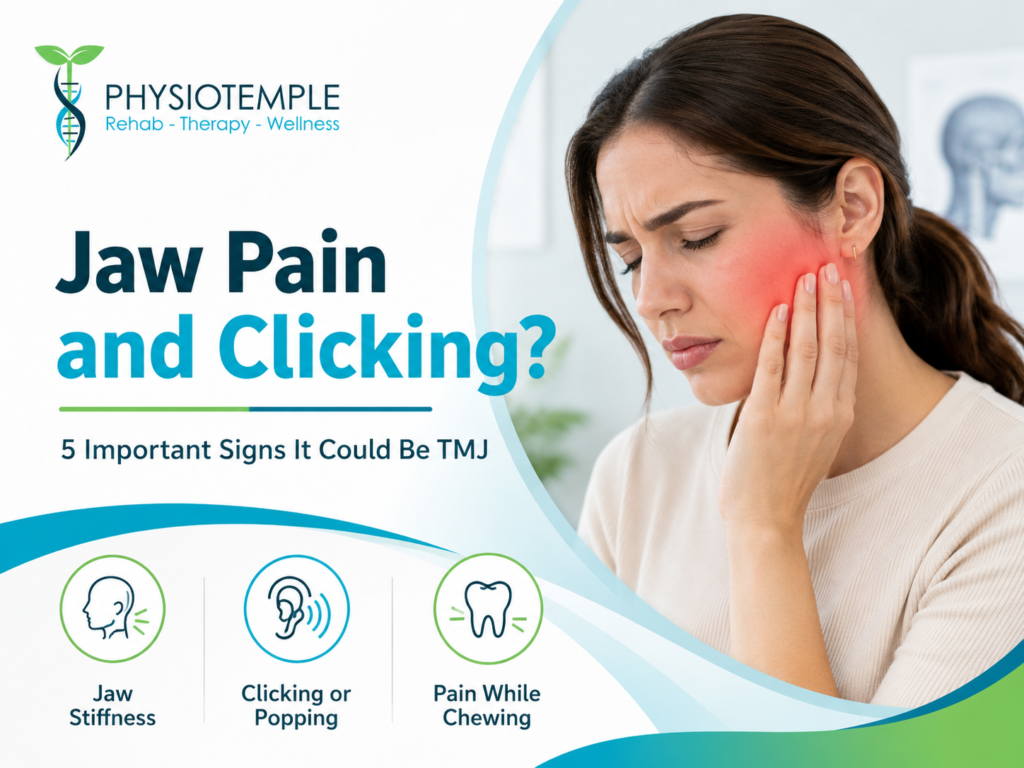
TMJ pain and clicking may involve soreness around the jaw, ear, temple, or face, along with popping sounds, difficulty opening the mouth, headaches, or discomfort while chewing. “TMJ” technically refers to the jaw joint, while “TMD” describes the group of conditions affecting the joint and the muscles that control jaw movement.
A clicking jaw does not automatically mean something is wrong. Clicking or popping without pain is common and may not require treatment. It becomes more important to get assessed when the clicking is painful, the jaw locks, movement becomes limited, or symptoms interfere with chewing, sleeping, or daily life.
What TMJ Pain and Clicking Can Feel Like
TMJ pain and clicking can feel different from person to person.
You may notice:
- Pain or tenderness around the jaw joint
- Clicking, popping, grinding, or crunching sounds
- Pain near the ear or temple
- Difficulty opening your mouth fully
- Jaw stiffness or locking
- Pain while chewing, talking, or yawning
- Headaches around the temples
- Tired or tight facial muscles
- Neck and shoulder tension
- Symptoms that feel worse during stressful periods
TMD symptoms can involve the jaw joint, chewing muscles, face, neck, and surrounding tissues. Pain may become more noticeable while chewing or when stress leads to increased clenching.
5 Important Signs Your Jaw Symptoms Could Be TMJ-Related
1. Your clicking is painful
A painless click by itself is not necessarily a problem. However, clicking accompanied by pain, tenderness, swelling, stiffness, or reduced movement may be associated with a temporomandibular disorder.
Pay attention to whether the discomfort happens while:
- Opening or closing your mouth
- Biting into food
- Chewing tougher foods
- Yawning
- Talking for extended periods
- Moving your jaw from side to side
Avoid repeatedly opening your mouth to “test” the click. Constantly checking or deliberately making the jaw pop may further irritate sensitive tissues.
2. Your jaw feels stiff or does not open normally
Your jaw should open and close without significant pain or restriction.
Possible signs of a problem include:
- Difficulty opening wide enough to eat
- Your jaw moving unevenly
- A feeling that the jaw catches during movement
- Temporary locking in an open or closed position
- Pain that stops you from opening comfortably
Limited mouth opening and jaw locking are recognized symptoms of TMD and should be assessed, especially when they interfere with eating or drinking.
3. You have jaw pain with headaches or neck tension
The jaw, temples, neck, and upper-back muscles can all feel tense at the same time. Some people with TMD experience headaches around the temples, facial discomfort, or pain that travels toward the neck.
Long hours at a computer or phone may also contribute to neck and shoulder tension. Read our guide to tech neck treatment in Woodbridge for more information about screen habits and neck discomfort.
You can also review our article about upper-back pain from sitting all day if your jaw symptoms regularly appear with tightness between the shoulder blades.
4. You clench or grind your teeth
Teeth clenching and grinding are also called bruxism. Some people clench during stressful situations, while others grind their teeth during sleep without realizing it.
More severe bruxism can contribute to:
- Jaw pain or tiredness
- Morning headaches
- Tooth sensitivity
- Worn, flattened, chipped, or damaged teeth
- Tender jaw muscles
- Jaw stiffness
Regular dental care is important because your dentist can check for tooth wear, damage, and other dental causes of jaw pain.
5. Chewing, yawning, or stress makes it worse
TMJ pain and clicking may become more noticeable after chewing hard foods, opening wide, clenching, nail biting, gum chewing, or periods of increased stress.
TMD often has more than one contributor. Possible factors include clenching, grinding, jaw injury, arthritis, repetitive oral habits, and stress. In many cases, the exact cause is not obvious.
What You Can Do for TMJ Pain and Clicking
1. Give the jaw a temporary break
During a painful flare-up, temporarily choose foods that require less forceful chewing.
Examples include:
- Eggs
- Yogurt
- Rice
- Pasta
- Soup
- Soft vegetables
- Smoothies
- Fish or other soft proteins
Cut food into smaller pieces and chew slowly. This does not mean you must eat only soft foods permanently. The goal is to reduce irritation for a short period while symptoms settle.
2. Avoid repeatedly opening your mouth wide
Try to reduce activities that cause symptoms, including:
- Chewing gum
- Biting your nails
- Chewing pens or ice
- Taking very large bites
- Deliberately clicking your jaw
- Clenching your teeth
- Resting your chin heavily on your hand
These habits may place additional strain on an already sensitive jaw.
3. Practise a relaxed resting position
When you are not eating or speaking, your teeth generally do not need to remain pressed together.
Try allowing:
- Your lips to rest gently together
- Your teeth to stay slightly apart
- Your tongue to rest comfortably
- Your jaw and shoulders to relax
Heat or cold, gentle jaw exercises, soft foods, and self-management are among the simpler conservative approaches commonly recommended before more invasive treatment is considered.
4. Address surrounding neck and muscle tension
Jaw symptoms can sometimes appear alongside neck, shoulder, or facial muscle tension.
Massage therapy for tight muscles and stress may help reduce tension in surrounding muscles when stress and clenching are contributing factors.
A physiotherapy assessment in Vaughan may include jaw movement, neck mobility, posture habits, muscle function, and an individualized exercise plan.
When appropriate, chiropractic care in Vaughan may focus on associated neck or upper-back mobility restrictions. Treatment should be based on your assessment rather than assuming every jaw click needs hands-on care.
5. Speak with a dentist when dental factors are possible
See a dentist when you have:
- Tooth pain or sensitivity
- Visible tooth wear or damage
- Suspected nighttime grinding
- Changes in your bite
- Pain after dental work
- Questions about a dental appliance or night guard
Jaw pain can sometimes come from dental problems rather than TMD, so it is important not to self-diagnose every facial or jaw symptom as “TMJ.”
Do This, Avoid This
Do This
- Choose easier-to-chew foods during painful flare-ups
- Keep your teeth slightly apart when resting
- Use heat or cold when it feels helpful
- Notice when stress makes you clench
- Keep dental appointments up to date
- Get assessed if movement is painful or limited
- Follow exercises recommended for your specific problem
Avoid This
- Constantly testing or popping the jaw
- Chewing gum during a painful flare-up
- Taking extremely large bites
- Forcing the mouth open through pain
- Assuming every click requires treatment
- Ignoring jaw locking or worsening restriction
- Starting permanent bite-changing treatment without a thorough assessment
The National Institute of Dental and Craniofacial Research recommends beginning with simpler, reversible approaches and being cautious about treatments that permanently change the teeth, bite, or jaw joint.
When to Book an Assessment
Consider booking an assessment when:
- Jaw pain continues or repeatedly returns
- Clicking is accompanied by pain
- Your jaw feels stiff or tired
- You cannot open your mouth normally
- Chewing or yawning causes pain
- Your jaw temporarily locks
- You also experience headaches or neck tension
- Symptoms affect eating, sleeping, speaking, or work
At Physiotemple Health, an assessment may include your jaw movement, facial and chewing muscles, neck and upper-back mobility, posture habits, symptom triggers, and relevant health history.
Depending on your findings, your care plan may involve physiotherapy, massage therapy, chiropractic care, home exercises, self-management guidance, or referral to a dentist or physician.
When Jaw Pain Needs Urgent Care
Seek prompt medical or dental care if you have:
- Major facial or jaw swelling
- Fever or feeling generally unwell with dental or facial swelling
- Jaw pain following significant trauma
- An inability to eat or drink
- A jaw that becomes locked and will not move
- Difficulty breathing or swallowing
- Swelling spreading toward the eye
- Sudden chest pressure or pain spreading into the jaw
Jaw and facial pain can sometimes come from infection, dental disease, injury, or other medical conditions rather than TMD. Facial swelling that affects breathing, swallowing, eye involvement, or mouth opening requires urgent assessment.
FAQs About TMJ Pain and Clicking
Does a clicking jaw always mean I have TMJ disorder?
No. Clicking or popping without pain is common and may not need treatment. It should be assessed when it becomes painful, movement is restricted, the jaw locks, or it interferes with normal activities.
Can stress cause jaw pain?
Stress may increase clenching or muscle tension, which can aggravate symptoms in some people. Stress is one possible contributor, but it is not the only possible cause of jaw pain.
Can TMJ problems cause headaches?
TMD can be associated with headaches around the temples, along with jaw, facial, ear, and neck discomfort. However, headaches have many possible causes and should not automatically be blamed on the jaw.
Can physiotherapy help TMJ pain and clicking?
Physical therapy is one conservative treatment option for certain TMD presentations. Care may involve education, exercises, movement assessment, and treatment of contributing jaw or neck factors.
Should I see a dentist or physiotherapist?
See a dentist when tooth pain, grinding, tooth damage, bite changes, or dental conditions may be involved. A physiotherapy assessment may be appropriate when symptoms involve painful jaw movement, muscle tension, limited mobility, headaches, or associated neck discomfort. Some people benefit from coordinated care.
Should I use a mouth guard?
A dental appliance may be appropriate for some people, but it should be recommended and monitored by a qualified dental professional. Do not purchase or modify an appliance based only on an online diagnosis.
Book Help for Jaw Pain and TMJ Symptoms in Woodbridge
If TMJ pain and clicking are affecting your eating, sleep, work, or daily comfort, Physiotemple Health can help assess the jaw, neck, upper back, movement habits, and muscle tension that may be contributing.
📍 12 Woodstream Blvd, Unit 5, Woodbridge, ON
📞 Call or text: 905-995-4456
📅 Book Online: https://physiotemple.juvonno.com/portal/publicbook.php?step=practitioner&branch_id=1
Book an assessment today and get a clearer plan for your jaw pain and clicking.